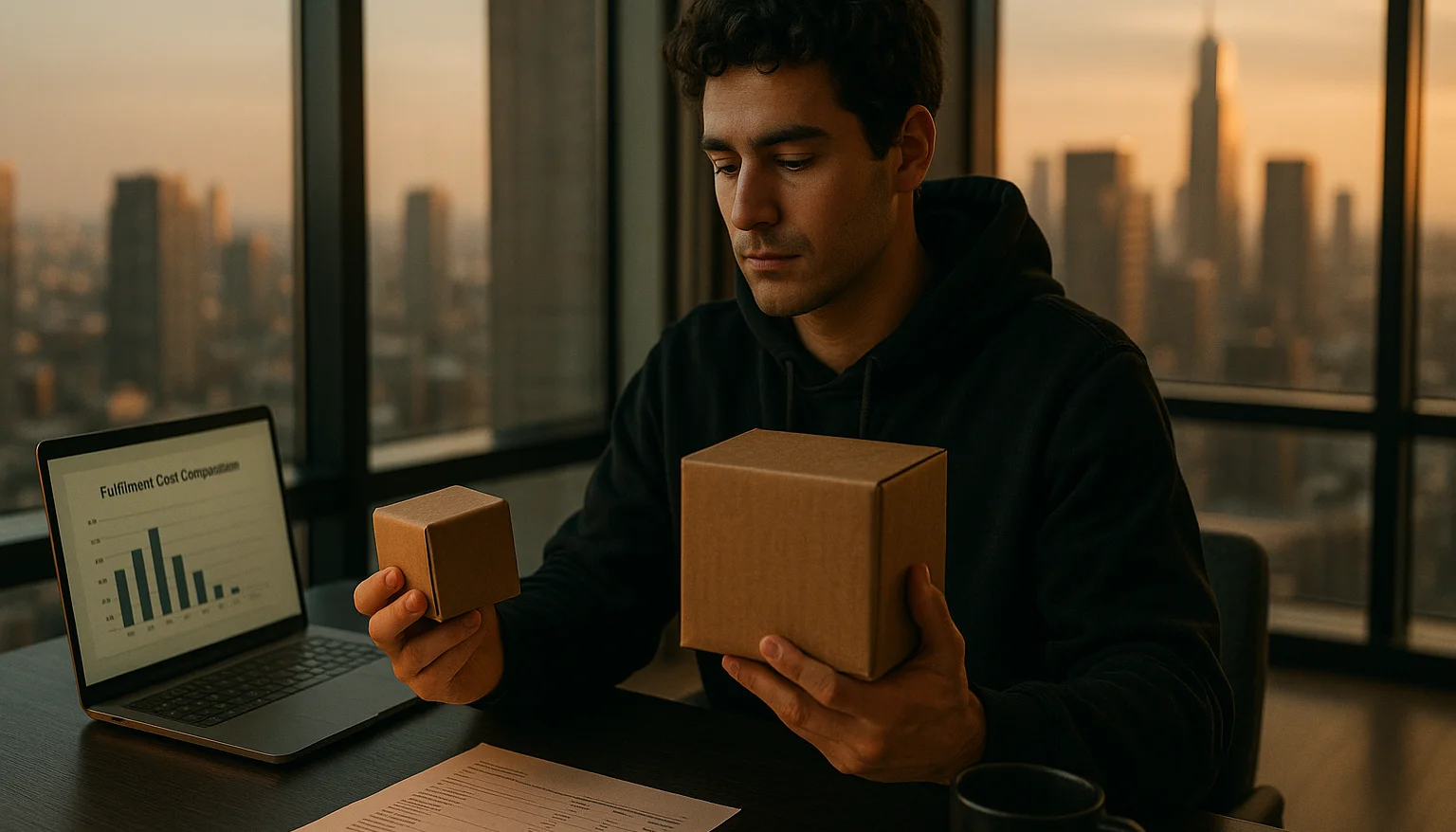
AI ad creative in 2026 is the lever that took one of my Shopify stores from $1K/month to $50K/month in 90 days. Not because the AI invented better ads. Because the AI compressed the iteration cycle from "10 ads a month, expensively" to "10 ads a day, cheaply". The store that can test 300 ad variations a month beats the store that can test 10, every time. Below is the full pipeline.
The four AI ad components
Ad creative breaks into four layers. AI now handles each layer better than most freelance teams did three years ago.
Hook. The first 2 seconds of the video or the first line of the static ad. Determines whether viewers keep watching or scroll. AI generates 20-30 hook variants in minutes.
Visual. The image, animation, or video frame that grabs attention. Midjourney, Veo 3.1, Kling, Nano Banana - all of these can produce ad-quality visuals fast.
Voice and script. The voiceover and the narrative arc. ElevenLabs handles voice. Claude or ChatGPT handles script.
UGC-style avatar. The "person on camera" who feels authentic. Arcads.ai, Synthesia, Heygen handle AI avatars that sell like UGC creators used to.
The hook generation prompt
Hook generation is where you start. Prompt structure:
You are a senior direct-response copywriter. Generate 30 first-line hooks for a Facebook video ad selling [product] to [audience]. Each hook is one sentence, under 15 words. Mix hook types: problem-statement, surprising-stat, contrarian-claim, question, before-after-tease, demo-tease. No fluff words. No "imagine if". Start with concrete.
Output is 30 hook candidates. Most are decent. The best 5-8 become test material for ad variants.
The visual generation pipeline
For product-in-scene visuals - Midjourney with the product description in the prompt. Detailed in Midjourney for e-commerce.
For motion - Veo 3.1 or Kling Pro. Feed in a static frame plus motion description. Output: 5-10 second video clips of the product in use. Cost: $1-$3 per generation.
For UGC-style talking-head - Arcads.ai or Heygen. Pick an avatar, paste a script, output is a 15-30 second video of an AI person delivering the message. Cost: $5-$15 per video. Replaces a $500 UGC creator booking.
The voice layer
ElevenLabs handles voiceover. Pick a voice that matches the brand. Paste the script. Output is studio-quality audio.
For multilingual ads - same script translated, same voice used in each language. ElevenLabs voice cloning means the same "narrator" can speak Spanish, French, German with consistent tone. Major unlock for international expansion.
The assembly
Three workflows depending on complexity.
Workflow 1 - simple static ad. Visual from Midjourney + hook from the AI prompt + product photo overlay in Photoshop or Canva. 15 minutes per ad. $0.50 per ad in API costs.
Workflow 2 - simple video ad. AI-generated background video + AI voiceover + product B-roll spliced together in CapCut or Premiere. 45 minutes per ad. $5-$10 per ad.
Workflow 3 - full UGC-style. AI avatar talking-head + B-roll of product + AI voice + on-screen text. 60-90 minutes per ad. $15-$25 per ad.
The pure-product video ads (workflow 2) currently outperform workflow 3 in most testing. The "real" UGC creators still beat AI avatars when budget allows, but the gap is closing.
The store that can test 30 ads a week beats the store that can test 5. Every time. AI removed the cost barrier.
The testing protocol
Produce 15-20 ad variations for the launch. Mix of hooks, mix of visuals, mix of formats.
Launch all 15-20 at small daily budget ($5-$10 each). Run for 48-72 hours.
2-3 ads will show strong early signal (high CTR, low CPC, conversions starting). Most will not.
Scale the winners aggressively. Pause the losers immediately. Produce 5-10 new variations based on what the winners had in common.
Repeat weekly. The catalog of working ads grows. The cost per acquisition drops over time as you learn what specifically works for your product and audience.
The trap to avoid
Producing AI ads that look obviously AI. Buyers can tell when the lighting is wrong, the lip-sync is off, the voice has the slight metallic edge. AI ads that look AI underperform.
The fix - light editing of every AI output before launch. 5-10 minutes per ad of color grading, B-roll cuts, audio cleanup. The output should feel native to the platform, not announce itself as synthetic.
Also, do not use the same AI avatar across 50 ads. Buyers notice the recurring face and assume it is a fake creator. Use 3-5 different avatars in rotation.
The platforms and the format-fit
Facebook and Instagram - 9:16 vertical video, 1:1 square also works. 15-30 second optimal length. UGC-style outperforms branded-looking creative.
TikTok Shop - 9:16 vertical, 15-30 seconds, demo-driven, native-feeling. The TikTok algorithm punishes ads that look like ads.
YouTube Shorts - similar to TikTok but slightly more polish accepted.
Pinterest - vertical or square, longer copy supported, more aspirational-style imagery wins.
Google Display - mostly static, focused on offer clarity rather than narrative.
The cost math
Manual creative production - one good ad takes a freelancer about $200-$500 and 1-3 days. Across 30 ads, that is $6K-$15K and 30-90 days.
AI-assisted creative production - one good ad takes you 15-90 minutes and $1-$25 in tool costs. Across 30 ads, that is $30-$750 and 1-3 days of focused work.
The cost compression is real and it is what unlocks aggressive testing. The competitive advantage in 2026 paid media is not creative quality - it is creative volume produced at acceptable quality.
For the broader AI stack, read the complete AI stack for e-commerce and AI-generated UGC videos playbook. The full ad-testing module - including the briefing templates - is in the course. Produce 10 ads this week. Test 8 of them. Scale the winners.