AI voiceovers in 2026 are good enough to use in product videos that customers do not flag as fake. Five years ago the same statement would have been laughable - the voices were robotic and obviously synthetic. Today the gap between AI and human voiceover is small enough that most e-commerce video work has migrated to AI for cost reasons. Below are the tools that work, the use cases that match each one, and the ethical line that matters in 2026.
ElevenLabs - the default
If you can pick one voice tool in 2026, ElevenLabs is the answer for most operators.
Their multilingual voice model handles English, Spanish, French, German, Italian, Portuguese, Japanese, and 20+ other languages with quality that passes the casual listener test. Voice cloning from a 30-second sample works well enough to clone your own voice for content.
Pricing - $5/month entry tier, $22/month "Creator" tier (most operators), $99/month for higher volume. The credits-based system scales with usage.
Best for - product video voiceovers, multilingual ad variations, podcast intros, customer service voice channel.
Limitations - emotional range still slightly limited compared to professional voice actors. For high-stakes brand audio (a polished hero video for the homepage), the gap shows.
Play.ht - the alternative
Play.ht offers similar features at a slightly different price point. The voice library has different personalities than ElevenLabs which is sometimes the deciding factor.
Pricing - $39-$99/month depending on tier.
Best for - operators who tried ElevenLabs and could not find a voice that matched their brand. Play.ht's library has some warmer, more conversational voices that ElevenLabs lacks.
OpenAI's voice models
Available through the API at low per-character cost. Good for high-volume, less-polished use cases.
Best for - automated customer service voices, internal tooling, large-batch generation where per-unit cost matters.
Less good for - branded marketing content where the voice represents the brand. Limited voice library compared to ElevenLabs.
The use cases that work for AI voice
Product video voiceovers. The 15-30 second voiceover that accompanies a product demo. AI handles this well.
Multilingual ad variations. Take an English script and produce versions in Spanish, French, German for the same campaign. Massive ROI on opening EU traffic.
Customer service voice bots. If you have outgrown text-only support, AI voice bots handle tier-1 issues at a fraction of human cost.
Walkthrough videos and tutorials. The how-to videos that explain product use. AI narrator is fine for these because the content matters more than the voice personality.
Audiobook-style content. Podcasts, blog posts read aloud, audio versions of email newsletters. AI is solid here.
The use cases where AI voice still falls short
High-emotion brand storytelling. The video where you talk about your origin story and want it to move people. AI handles this but the emotional layer is detectably synthetic. Use your own voice or a human voice actor.
Live conversations with customers. Voice AI handles scripted call flows but real conversational nuance is still beyond it for most cases.
Comedy and personality-heavy content. AI lacks the timing and unpredictability that makes voice comedy work.
Critical sales calls with high-ticket customers. The human-to-human connection is part of the sale. AI voice does not replace it.
The ethical line
Two things matter in 2026.
One - voice cloning of other people without consent is illegal in most jurisdictions and banned by every major platform. Cloning your own voice is fine. Cloning a celebrity, a competitor, or even your customer's voice is not.
Two - disclosure when relevant. If your product video uses an AI voice and is in a category where the voice carries trust (health, finance, advice), the disclosure norms are tightening. Meta, TikTok, and YouTube all have policies about AI-generated content disclosure.
The safe operating zone - clone your own voice, use stock AI voices, do not impersonate real people, disclose when the platform asks.
AI voice is a tool. The ethical use of any tool is your responsibility, not the tool's.
The workflow that works
Step 1 - write the script. Use ChatGPT or Claude. 100-150 words for a 30-second video. 60-80 words for a 15-second video.
Step 2 - pick the voice. Test 3-5 voices on the first sentence of your script. Pick the one that matches the brand.
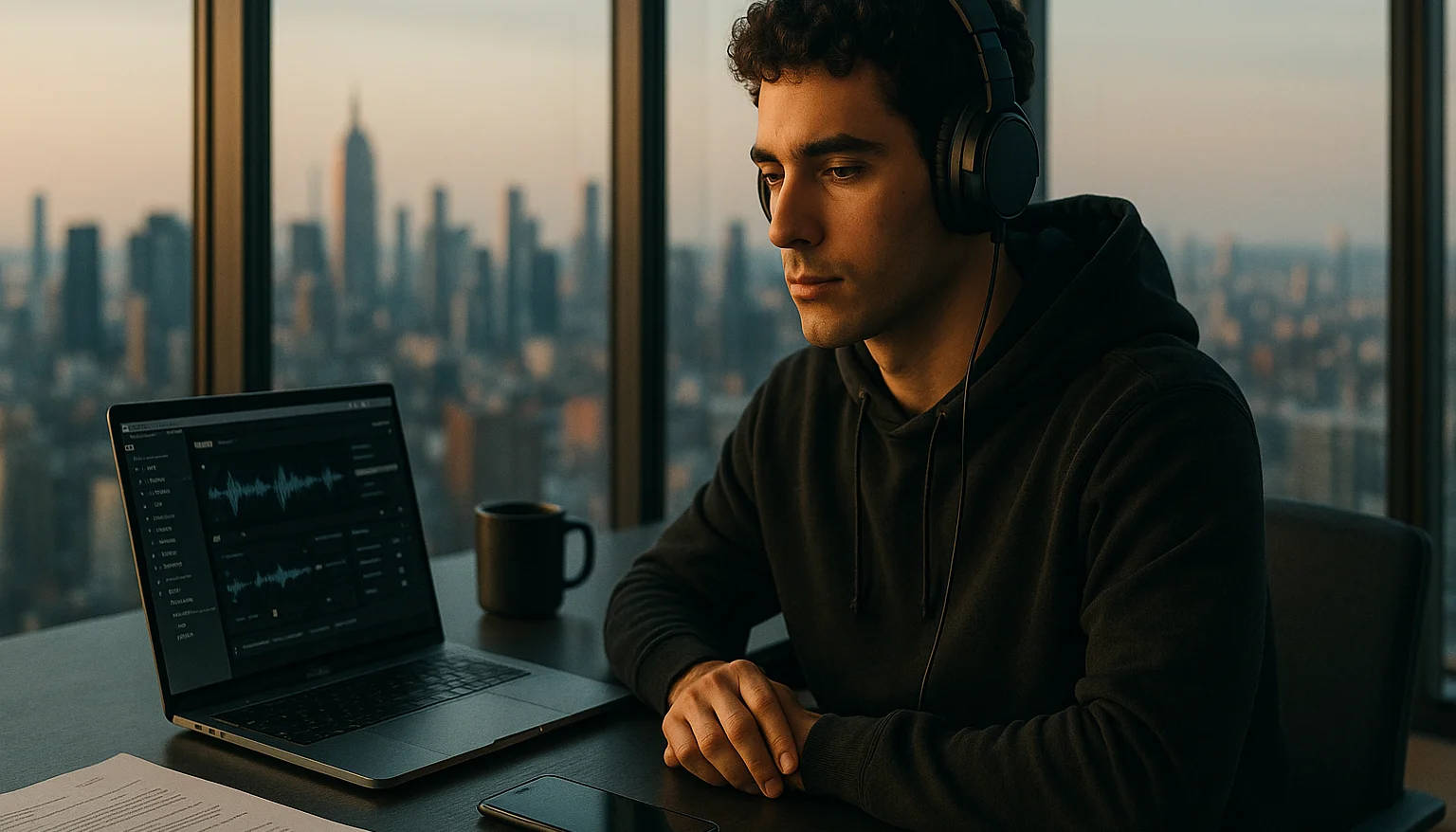
Step 3 - generate the voiceover. ElevenLabs allows pace and emphasis control through punctuation and special tags. Use them.
Step 4 - listen back twice. The first pass to catch obvious robotic moments. The second pass for pacing and emphasis.
Step 5 - if quality is acceptable, drop into the video edit. If not, adjust pronunciation or pacing tags and re-generate.
Total time per voiceover - 5-10 minutes including iteration. Compare to scheduling and paying a voice actor at $50-$200 per take.
The cost math at scale
10 voiceovers per week in 2026 at the Creator tier of ElevenLabs - about $0.40-$1.20 per voiceover.
Same coverage with human voice actors at $50/voiceover - $500/week or $26,000/year.
The savings cover the subscription many times over. The savings also pay back the small quality compromise on most projects.
For the broader AI stack across the business, read the complete AI stack for e-commerce and AI-generated UGC videos: the full playbook. The full AI voice module is in the course. Sign up for ElevenLabs free tier. First voiceover by tomorrow.