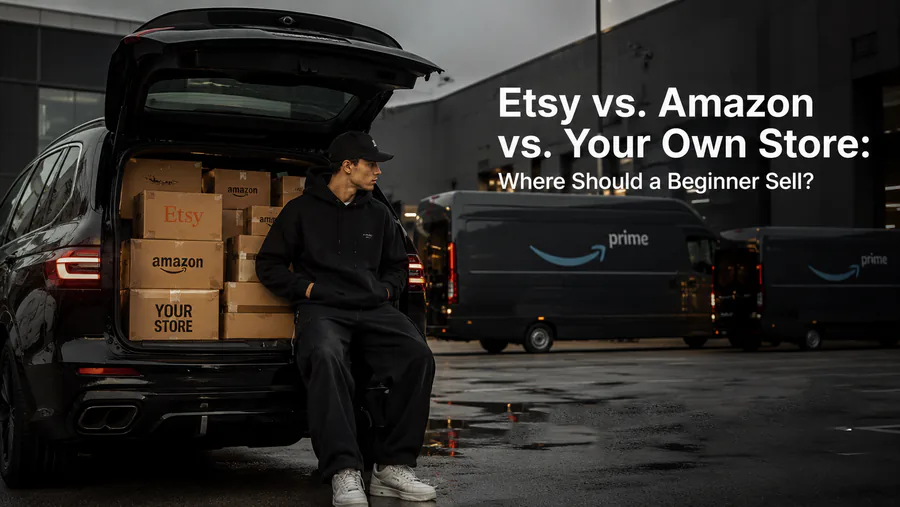
"Where should I sell?" is the question I get most often. The honest answer: it depends on what you're trying to learn first. Each option teaches you something different — and costs you something different.
Amazon — the traffic giant
Amazon has the buyers. People arrive already holding a credit card. That is its superpower. The trade-off: brutal competition, real fees, and a marketplace that owns the relationship with your customer. You're renting attention, not building an audience.
Best for: learning how products sell at scale, fast.
Etsy — the niche marketplace
Etsy rewards personality. Handmade, vintage, custom, design-led products do well here, and the buyer expects a smaller, more personal shop. Fees are lower than Amazon, competition is gentler — but the total traffic is smaller too.
Best for: creative and custom products, and sellers who enjoy the storytelling side.
Your own store — the long game
On Shopify or a similar platform, you own everything: the brand, the customer email list, the data, the margins. The catch is simple and unforgiving — no one comes unless you bring them. You are now also the marketer.
A marketplace lends you customers. Your own store lets you keep them. Beginners need the loan first.
So what should you actually do?
Here's the sequence I recommend, and it's not "pick one":
- Start on a marketplace. Let Amazon or Etsy hand you traffic while you learn what converts. Make mistakes cheaply.
- Build the muscle. Listings, pricing, photos, customer messages — these skills transfer everywhere.
- Then open your own store. Once you know what sells, build the asset you fully own.
The mistake isn't choosing the "wrong" platform. The mistake is waiting months to choose at all. Pick the one that fits your product today, and start.