Most people who want to sell on Amazon never list a single product. Not because it's hard — because they try to learn everything at once. Product research, taxes, branding, ads, photography. The brain overloads and quietly closes the tab.
After ten years of building online stores, here is what I wish someone had told me on day one: you only ever need to know the next step. So let's walk through the real sequence.
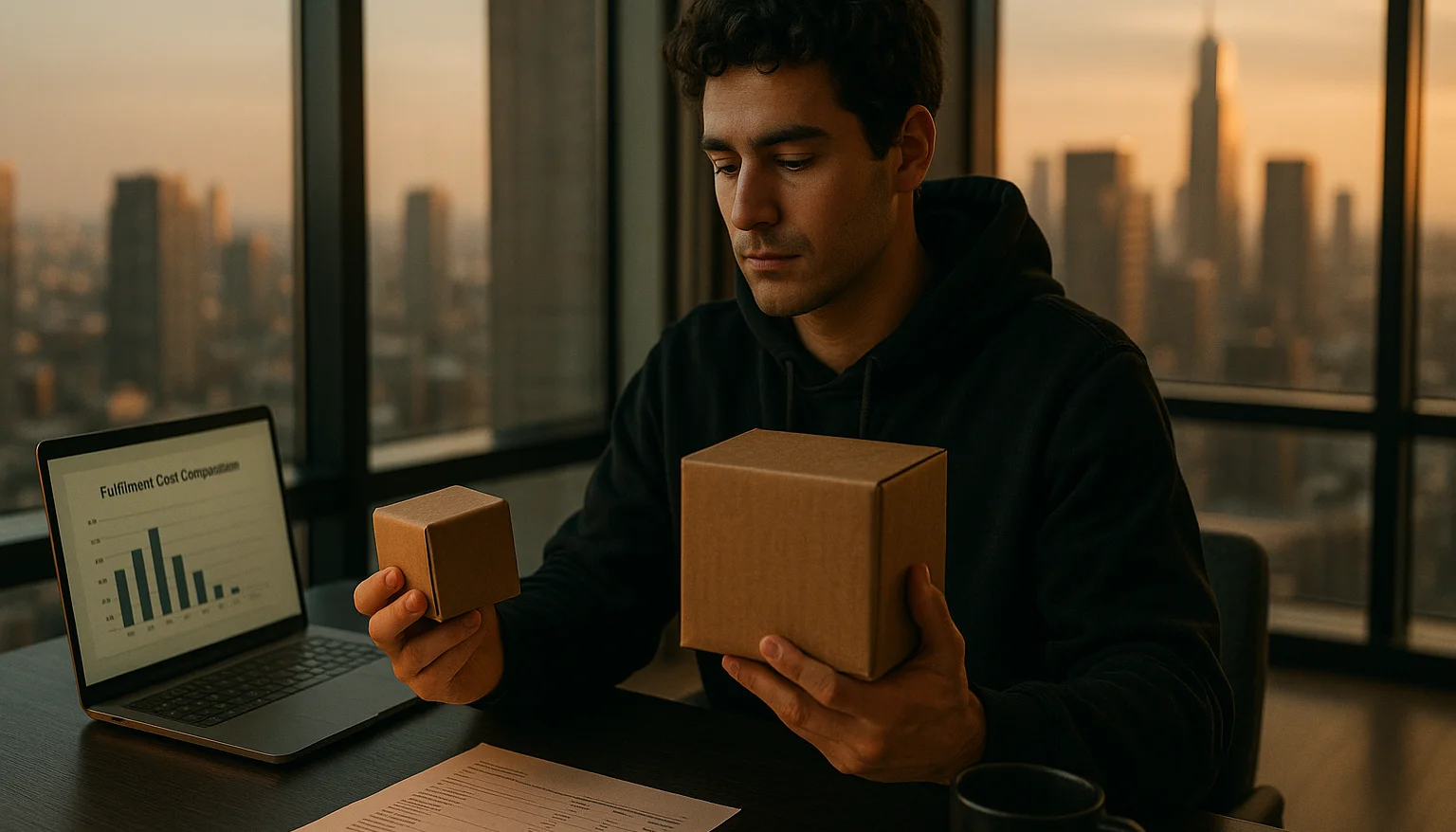
Step 1 — Choose how you'll fulfil orders
Before the product, decide the model. It changes everything else.
- Online arbitrage / wholesale: you buy existing products cheaper and resell them. Lowest learning curve, fastest first sale.
- Private label: you put your brand on a product. Higher margins, but slower and more capital.
- Print on demand: no inventory at all — the product is made when it's ordered.
For a first store with limited money, start simple. The goal of your first sale is not profit — it's proof that the machine works.
Step 2 — Pick one product, not twenty
A good first product is boring on purpose: steady demand, a price between $15 and $40, light and small enough to ship cheaply, and not dominated by ten giant brands. Use Amazon's own search bar and Best Sellers pages before you pay for any tool.
If you can't explain in one sentence why a stranger would buy your product instead of the one next to it, you don't have a product yet — you have a guess.
Step 3 — Build a listing that actually sells
Traffic is wasted on a weak listing. Three things carry most of the weight:
- The main image: clean, bright, fills the frame. This is your one chance in search results.
- The title: what it is, who it's for, and the one feature that matters — in plain words.
- The first two bullets: answer the buyer's biggest doubt before they have to ask.
Step 4 — Launch small, then read the data
Your first listing will not be perfect. That's fine. Get it live, send a little traffic, and watch one number: the conversion rate. If people click but don't buy, the problem is the listing. If nobody clicks, the problem is the image or the price. The data tells you what to fix — you don't have to guess.
That's the whole roadmap. Not easy, but simple. The people who win on Amazon aren't the smartest — they're the ones who took step one while everyone else was still researching.