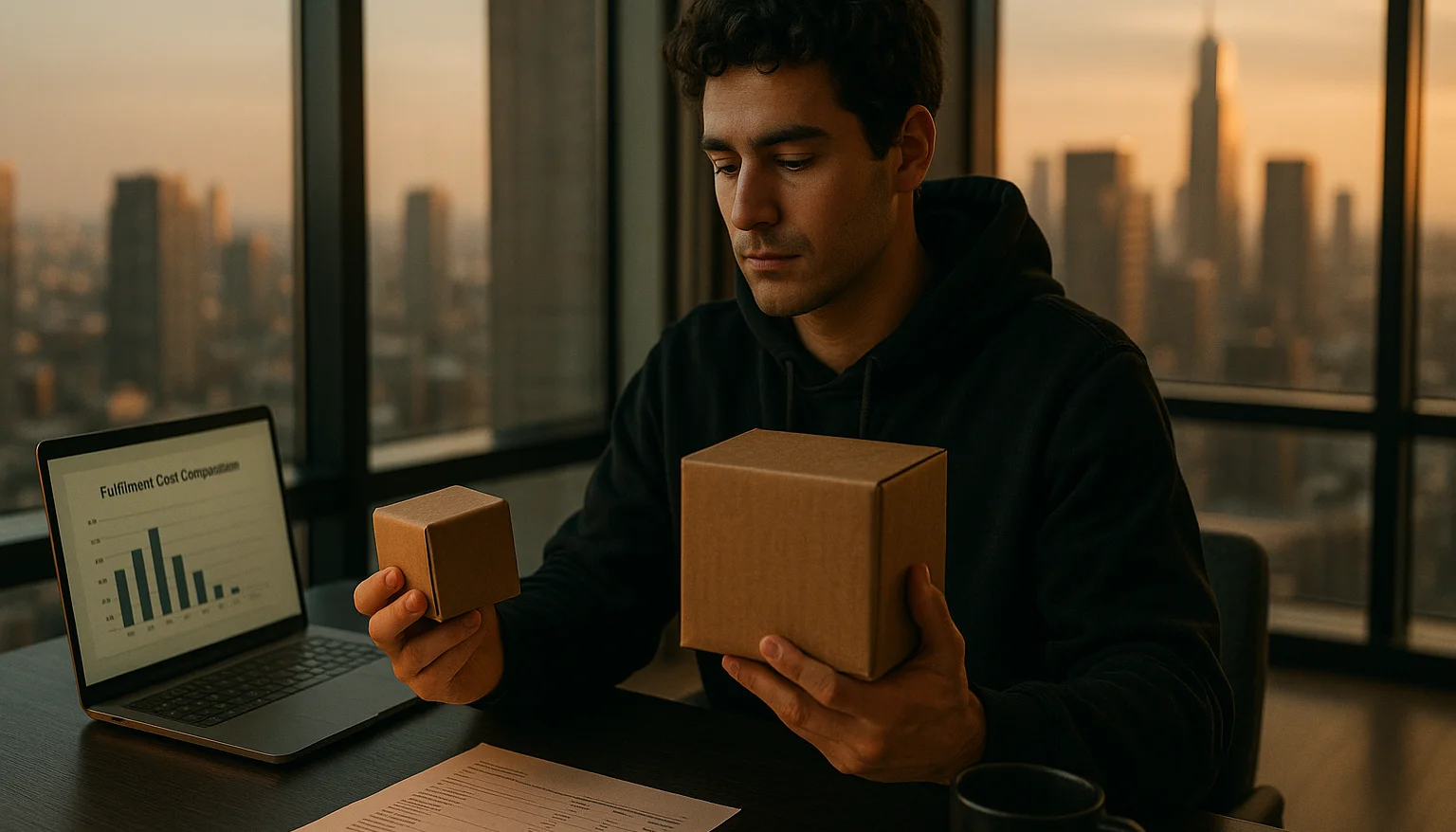
AI-assisted product research in 2026 is now better than the old manual approach for most categories. Not because AI knows what is going to sell - it does not - but because AI can compress 20 hours of trend scraping, demand validation, and competitive analysis into 90 minutes. The operators who learned this workflow are testing 5-10 products a month while everyone else is still testing one a quarter.
What AI is good at in product research
Three jobs specifically, where AI saves the most time.
One - synthesising trends from multiple sources. Reading TikTok, Reddit, Pinterest, Etsy and Amazon at once, finding the products that are emerging across two or more of those sources. Manual research takes hours. AI does it in minutes.
Two - scoring candidates against criteria. Once you have 30 candidate products, AI can run them through your criteria (price range, margin, demand, competition) and rank them. Manual scoring is tedious and error-prone. AI is consistent.
Three - generating differentiation angles. Given a generic product, AI can brainstorm 10-15 specific angles, niches, or twists that could make it differentiated. Faster than human brainstorming and broader.
What AI is NOT good at - actually picking the winner. That still requires human judgement on taste, brand fit, and operational feasibility. AI shortlists. You decide.
The 4-step AI product research workflow
Step 1: trend gathering with Claude or ChatGPT
Prompt the model with a structured request. Example:
You are a senior product researcher for an e-commerce business. Based on what is trending across TikTok, Pinterest, Etsy, and Reddit in the [category] space over the last 3 months, list 30 specific product types that show emerging demand. Include for each: estimated unit price range, primary buyer demographic, why this product is gaining traction, and one differentiation angle a small seller could use.
The model produces a list. Some items are nonsense. Some are useful starting points. The yield is roughly 5-10 viable candidates from 30 ideas.
Important - verify everything before acting. The model invents details. Cross-check the trending claim against Google Trends, Reddit, and a quick TikTok search. Anything that does not verify, discard.
Step 2: deeper validation with web data
For each candidate that survived Step 1, run additional checks with AI helping you process the data.
Search Etsy and Amazon for the product type. Note the top 5 listings. Use AI to summarise: average price, review count distribution, photo quality benchmark, common pain points in negative reviews.
The AI summarisation step is fast (90 seconds per product) and produces a clear comparative view that would take 30+ minutes manually.
Step 3: unit economics modeling
For each survivor, give the AI your cost structure and ask it to model the unit economics across price points.
I am considering listing this product at retail prices of $25, $35, and $45. Amazon FBA fees in this category are approximately 15% referral + $4.50 pick-pack. My estimated COGS including duty and shipping is $9. PPC cost per acquisition is roughly $5. What is the profit per unit at each price point, and which one likely converts best given the competitive landscape?
The AI runs the math, gives you a quick comparative view, and highlights the realistic ones. Your judgement still picks the final price, but the math is no longer the bottleneck.
Step 4: differentiation brainstorming
For the 2-3 finalist products, ask the AI for 15 specific differentiation angles. Not generic "be premium" angles - specific ones. Bundle ideas, packaging concepts, brand stories, niche audience targets.
Most are weak. A few stand out. The yield is usually 2-3 strong angles per product to consider for the launch.
If you are not using AI yet, you are competing against sellers who already reduced their costs and sped up their testing cycles.
The prompts that actually work
Generic prompts produce generic output. The prompts above are specific because they include the constraints. The structure that consistently works in product research prompts:
- The role you want the model to play ("senior product researcher")
- The specific data sources or signal types to consider
- The output format you want (numbered list with specific fields)
- The criteria for inclusion (trending, emerging, price range)
- What to exclude (commodities, gated categories, IP-encumbered items)
Vague prompts get you "Beautiful, vibrant, innovative product ideas for the modern entrepreneur..." Specific prompts get you actual research.
What this replaces
The traditional product research process - manual scrolling, spreadsheets, Helium 10 deep dives, one product at a time - takes 15-25 hours per product candidate. Across 5 candidates that is 75-125 hours.
The AI-assisted process described above takes 8-12 hours total for the same 5 candidates. Same depth of research. Different time cost.
The catch is that you still need product research instincts. The AI does not replace your judgement, it accelerates the data gathering and synthesis. Sellers who use this workflow without underlying instincts produce confidently wrong shortlists. Sellers who use it with strong instincts produce shortlists that are 4-5x better than manual research.
The tools beyond Claude and ChatGPT
Perplexity is useful for the trend-checking step because it cites sources. You can verify the AI's claims faster.
Gemini 2.5 Pro is useful for the data-summarisation step when you have to feed it large blocks of product listings or reviews.
Specialised tools - Helium 10's AI features, Jungle Scout's, Sellzone - are decent for Amazon-specific work but lock you into one platform. The general-purpose models are more flexible.
The mistakes to avoid
Trusting the AI's trending claims without verification. The model will confidently invent trends that do not exist. Always cross-check.
Using the AI to make the final pick. The AI cannot taste the market, evaluate brand fit, or judge operational feasibility for your specific situation. You make the pick.
Doing the research in one sitting. Spread across 2-3 days. The AI is more useful when you have time to think between rounds.
Not iterating on the prompts. The first version of a prompt usually produces mediocre output. The third or fourth version, refined based on what you actually want, produces output you can use.
What to expect over a year
Operators who adopt this workflow consistently test 8-12 products in their first year on Amazon. Most of those products fail. That is the point - the cycle is faster, so you can survive more failures.
By the second year, you have a sense for which categories and what kinds of products fit your operation, and your hit rate climbs noticeably. The compounding is on the process, not on any single product.
The biggest single mindset shift this workflow produces is treating products as experiments instead of bets. Each one is a hypothesis tested with real money. Some work, some do not, and the learning compounds either way.
For the broader AI workflow across the business, read the complete AI stack for e-commerce and how to do product research for Amazon. The full AI-assisted research module, including the prompt vault, lives in the course. Run the first prompt this week. Verify the output. Pick a finalist.