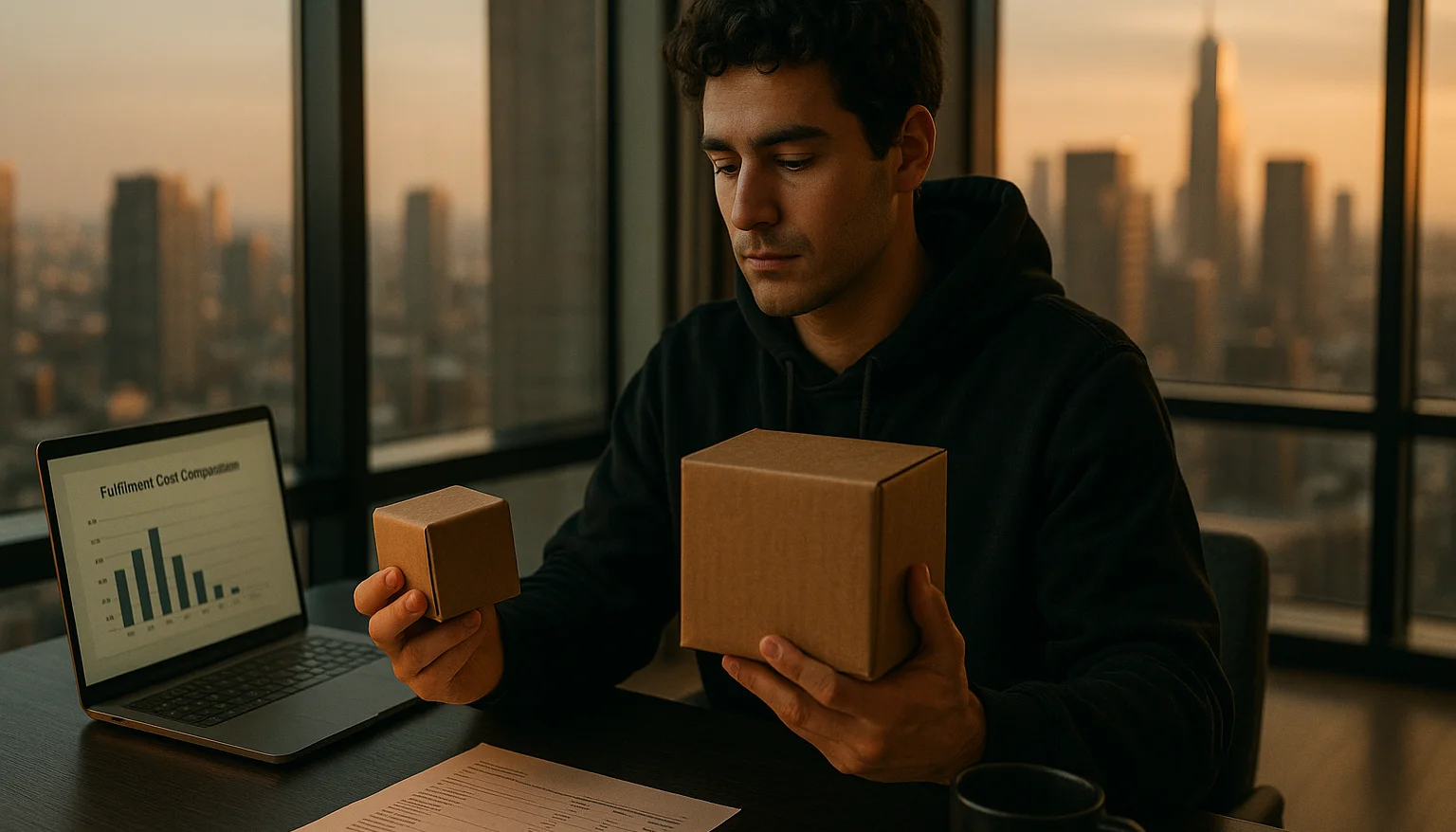
Willpower loses to environment every time. This is the single most underrated fact in productivity. Most people who fail at consistency are not weak. They are operating in environments that make the wrong behavior easier than the right one, and the brain takes the easier path almost every time. Below is the complete environment design playbook that quietly does the work willpower cannot.
The principle
Behavior is a function of two variables - intention and friction. Intention is what you decided you want to do. Friction is the energy required to do it.
The default model says "increase intention". Motivation, discipline, goal-setting, vision boards. All of this attempts to push the intention variable higher.
The cheaper and more reliable approach is to lower the friction on what you want and raise the friction on what you do not want. The behavior follows the math, regardless of how motivated you feel.
This is not philosophical. It is engineering. Design the environment such that the path of least resistance is the path you want, and 80% of your behavior changes automatically.
The three layers of environment
Three layers to design - physical, digital, social. Each one matters and each one is usually ignored.
Physical environment
The room where you work. The objects on the desk. The food in the kitchen. The bedroom setup. The car interior. Every space you spend time in is shaping your behavior in that space.
The fix is to make the wanted behavior visible and frictionless, the unwanted behavior invisible and friction-heavy.
Examples - book on the bedside table, phone in another room. Workout clothes laid out the night before. Junk food out of the kitchen entirely (because "moderation" loses to convenience). Laptop set up at the desk overnight with the right tab already open. Pen and notebook within reach of the chair you actually sit in.
Tiny moves. Cumulatively they change what you do without you having to decide.
Digital environment
The bigger lever for most operators. Your phone is the highest-traffic environment in your life. Most people have it set up to lose them several hours a day.
Fix - notifications off across all non-essential apps. Home screen contains only the apps you want to use deliberately. Social media apps moved to a folder on the second screen, or removed entirely with browser-only access.
On the laptop - work tabs separated from non-work tabs. A second browser profile for entertainment so the work browser stays clean. Site blockers (Cold Turkey, Freedom) active during work hours.
One change that has the biggest single effect for most operators - phone in a different room for the first 90 minutes of the day and the last 60 minutes before sleep. Those two windows account for most of the wasted phone time in a normal day.
Social environment
The hardest to manipulate but the biggest lever long-term. Your social circle is doing more work to shape your behavior than you realize. Successful people stay successful partly because they surround themselves with other successful people. Stuck people stay stuck partly because their social circle reinforces the stuck patterns.
Fix - add 2-3 people whose trajectory you want to mirror. Join communities (paid, in-person, niche) where the average member is ahead of you. Reduce contact with people who actively pull you backward.
This is uncomfortable. Some of the pull-back is from people who love you. The work is not to cut them off, it is to reduce their share of your decision-making influence relative to the people moving forward.
Your success equals roughly 10% knowledge, 40% mindset, and 50% environment. You can walk away. That is what maturity means.
The audit
Before redesigning anything, run an environment audit. Walk through a normal day. For each behavior you regretted at the end (scrolling, snacking, drifting, procrastinating), ask - what about my environment made this easy?
Almost every answer points to something you can change.
The bowl of chocolates on the counter. The phone within arm's reach in bed. The 30 tabs open on the laptop. The friend who texts you about going out every Friday. The TV pre-loaded with shows you do not really enjoy.
Each of these is a friction-reducing setup for behavior you do not want. Reverse the friction.
The single best change
If you can only make one environmental change in the next 30 days, make the phone-elsewhere change. Phone in another room overnight. Real alarm clock by the bed. Phone retrieved after the first hour of the morning has already started.
The downstream effect is enormous. Sleep improves. Morning focus improves. Anxiety drops. Reading habit becomes possible. Conversation with your partner becomes natural again.
One change, dozens of downstream effects. The cheapest high-impact move available.
The boundary problem
If you live with other people, environmental changes get harder. Your spouse keeps the chocolates in the kitchen. Your roommate has the TV on by default. Your kids leave their phones everywhere and yours gets pulled into the same gravity.
The fix is to design your personal sub-environments inside the shared space. Your bedroom, your desk, your car, your hour after dinner. Even if the rest of the house is not optimized, these sub-environments can be.
This is also why operators who can afford to set up a dedicated workspace outside the home often see a step-change in output. The dedicated environment is not magic. It is just an environment where every cue is aligned with work and zero cues are pulling toward distraction.
The maintenance problem
Environments drift. The desk gets cluttered. The phone gets new notification permissions. The friend you reduced contact with starts texting again.
The fix is a monthly audit. 30 minutes. Walk through the spaces. Notice the drift. Re-tighten.
Most people set up the environment once, ride the benefit for 3 months, and then drift back to baseline. The audit prevents the drift.
What changes after 90 days
Three months into a redesigned environment, three things happen.
One - the desired behaviors start happening without thinking. Reading. Sleeping properly. Working at the desk. They are no longer decisions.
Two - the undesired behaviors feel weird when they happen. Scrolling for an hour feels off because it required effort to find the phone. The friction did its job.
Three - your sense of self updates. You are now "someone who reads daily" or "someone who works deeply", not because you are trying to be, but because the environment has been making that easy for a quarter.
The identity follows the environment more than it follows the intention. Most of who you are is a function of what is easy in the spaces you live in.
For the broader operations layer, read how to build discipline when you have no motivation and how to stop phone and social media distractions. The full operations module is in the course. Walk through your space tonight. Notice the friction. Move one thing.