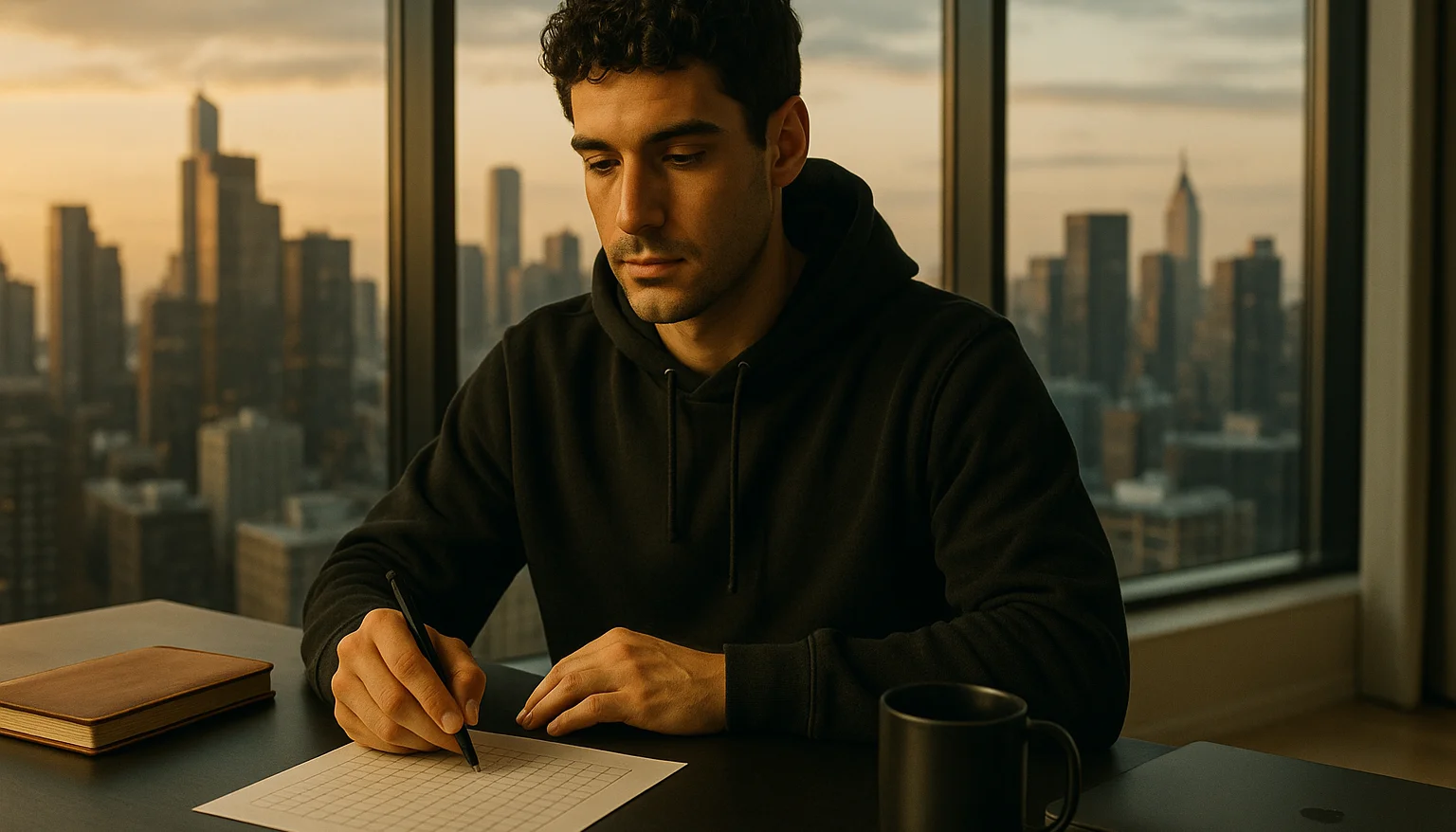
Vision boards do not work the way the internet says they work. Putting magazine cutouts of Lamborghinis and beach houses on a poster board does not summon those things into your life. The studies on visualisation that the motivational-content industry cites have been misrepresented for two decades. Here is the version of mental rehearsal that actually changes outcomes, based on the research and what I have seen across my own career and the careers of students I have walked through this.
Why the typical vision board fails
Sitting and visualising the end state - the car, the house, the money - is what researchers call "outcome visualisation". The original studies found that pure outcome visualisation can actually LOWER your motivation, because the brain partially experiences the goal as already achieved and stops pushing for it.
This is why people who spend hours daydreaming about their dream business often never start it. The visualisation gave them the dopamine. The execution stopped feeling necessary.
What works instead - process visualisation
Process visualisation is visualising the work that gets you to the outcome, not the outcome itself. The daily routine. The hard conversations. The setbacks. The small wins along the way. The actual sequence of behaviours, in detail.
The research is clear that this version of visualisation does improve outcomes. Athletes have used it for decades - they do not just visualise winning the race, they visualise the breathing pattern in mile two, the foot placement in mile four, the mental state in mile five when the body wants to quit. The mental rehearsal of the process primes the body and mind for the actual execution.
The version that works for an entrepreneur looks like this. Not "I see myself driving the BMW". Instead - "I see myself at the desk at 7am, opening the laptop, the morning task is sales emails, I write the first one even though I do not feel like it, the customer replies with an objection, I respond calmly with the answer I have already thought through, the sale closes by Friday."
How to do it
Pick one specific challenging part of building your business. The cold pitch. The supplier negotiation. The week of zero sales. The morning when you have to choose between the gym and another hour of sleep.
Spend 5 minutes mentally rehearsing the exact sequence of behaviours that would handle that situation well. The thoughts you would have. The actions you would take. The discomfort you would tolerate. The decision you would make under pressure.
Do this once a day for the next two weeks. The next time you encounter the actual situation, your nervous system has rehearsed it. The response is automatic.
The two-track version
Most useful version: one track for what you are building (the project), one track for the kind of person you are becoming (the identity).
Project track - what does next quarter look like if I run my system well. What customer interactions. What launches. What setbacks. What small wins. Specific.
Identity track - what does the next version of me act like. How does that person handle the bad weeks. What does that person not do anymore. What does that person value differently than the current version.
The identity track is the deeper one. The project changes every quarter. The identity is the architecture under all the projects, and that is what changes outcomes over years.
Think as if you are already successful. The thinking is the precursor to the doing.
What this looks like in daily practice
Most days I spend 3-5 minutes on this in the shower or on a walk. It does not require meditation, music, or a journal. Just mental rehearsal of how I want to handle the day ahead.
On hard days, the rehearsal is longer and more specific. The morning before a difficult conversation, I will sit for 10 minutes mentally walking through how I want that conversation to go. The pace. The tone. The places where I want to stay calm. The places where I want to be direct.
The conversation almost always goes better than it would have without the rehearsal. Not because the visualisation is magic but because I have pre-loaded the responses my nervous system would otherwise have to improvise under stress.
The honest test
The test for whether your visualisation is the useful kind or the time-wasting kind - does it leave you energised to do the work, or satisfied as if the work is already done?
Process visualisation leaves you energised. Outcome visualisation leaves you satisfied. The first one moves the project. The second one substitutes for moving it.
If you finish a visualisation session and feel like you have already accomplished something - you have visualised the wrong thing. Try again with the daily-process version.
For the broader mindset architecture, read how to build a vision for your life and the mindset shift that separates 1%-ers. The full mindset playbook is the spine of the first two modules of the course. Five minutes tomorrow morning. The process, not the outcome.