A supplier is not a vending machine you put money into and good products fall out. A supplier is a partner. The wrong one will ship you the wrong shade of green, miss your deadline, and still argue it is your fault. The right one will quietly make you money for years. So before you build a logo or pick a store name, you need to know how to find suppliers for your online store, and how to tell a real one from a person who will burn you.
I have learned this the slow way. The first physical product I ever sold on Amazon was a hairbrush. I sourced it from China for $1.50 and listed it at $9.99. It worked. But it worked because I had checked the supplier, ordered a sample, held it in my hand, and only then placed a bigger order. Skip that, and you are gambling.
This is the part of e-commerce beginners rush through because it is boring. Don't. Get this right and the rest of the business gets easier.
The three real routes for sourcing products
There are not twenty ways to source products. There are three, and you will probably use more than one over the life of your store. China, suppliers inside the US, and print on demand. Each one trades something for something else. Nobody route is best. The best route is the one that fits the product you picked and the money you actually have.
If you have not picked the product yet, stop here and go read how to find products to sell online first. You cannot find a supplier for a product that does not exist yet, and people do try, and they waste weeks.
Route one: suppliers from China
China gives you the widest selection and the lowest price per unit. That has been true for twenty years and it is still true. Most factories will customize the product for you too - packaging, colors, sizes, your logo. The main bridge to those factories is Alibaba. Start there. Once you understand how it works you can dig toward 1688 and direct factory contacts, but Alibaba is the place to learn.
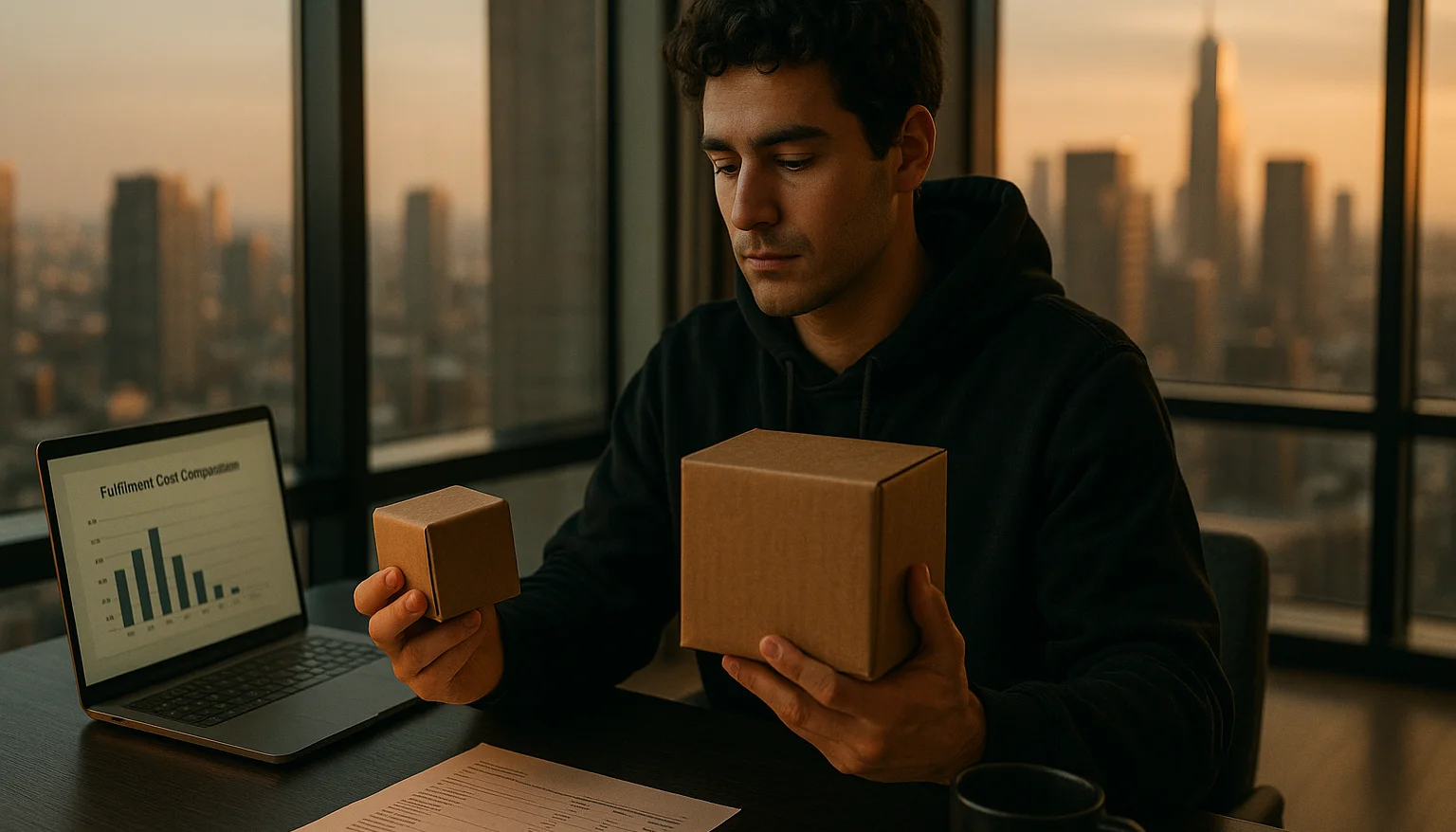
One thing changed the math, though, and you need to hear it plainly. Since early 2026, low-value postal packages from China face a US import duty of roughly 54 percent, or about $100 per package. The era of tiny cheap parcels slipping into the country for nothing is over. That does not kill China as a source. It just means the gap between a Chinese unit cost and a US unit cost is smaller than it looked two years ago. You have to do the full math now: product cost, plus shipping, plus the duty, landed in the US. Then compare.
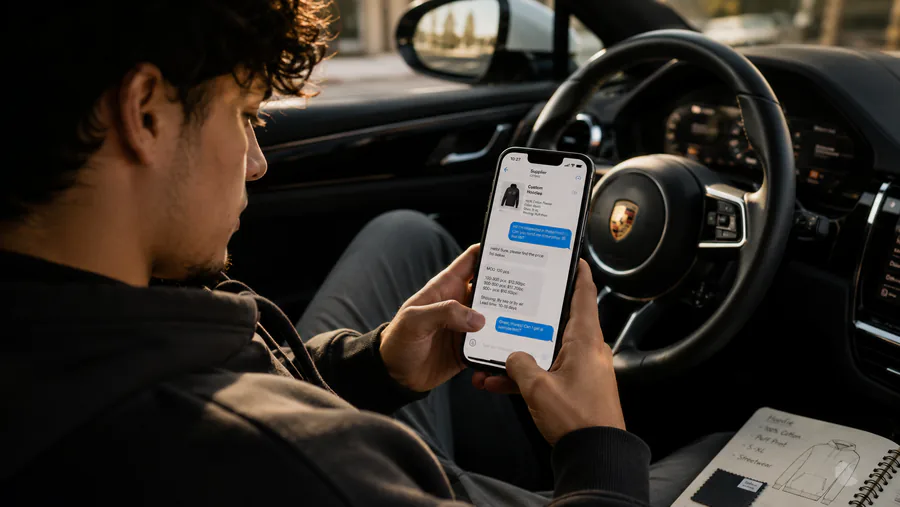
Two warnings from experience. First, never trust the price printed on an Alibaba listing. That number is bait. Message the supplier directly, tell them your quantity and your delivery address, and ask for a full quote that includes shipping. Prices move a lot with volume. Second, most sellers on Alibaba are not factories. They are middlemen sitting between you and the factory, adding their markup. Fine when you start. But once your volume grows, finding the direct manufacturer is how you protect your margin.
Don't take the prices listed on Alibaba at face value. Always message the supplier directly. Always ask for a full quote that includes shipping.
Route two: suppliers inside the US and other countries
The unit cost from a US supplier is higher. That used to end the conversation. It does not anymore. With the 2026 tariff on small China parcels, US suppliers and domestic warehouses are closer in real cost than they have been in years, and they hand you things China cannot: shipping in days instead of weeks, easier returns, no customs surprises, and a supplier who answers in your own time zone.
US sourcing also opens the arbitrage model. You find a product cheaper on one site and sell it for more on another. You spot something underpriced at a retailer that is not on Amazon yet, and you list it there. There are endless versions of this. It works because a large group of buyers do not want to spend an hour hunting for the lowest price. They see it, they like it, they buy it in two minutes, they move on. That behavior is exactly why dropshipping has survived this long.
And do not forget suppliers outside both China and the US. I am from Ukraine, and Ukrainian shops make genuinely good products with strong service and ready-made photos and video you can use straight away. Most US sellers never look there. That is the point. A source nobody else uses is a source nobody else has competed your margin down on.
Route three: print on demand, the safest first step
If you are starting with little money and no stomach for risk, print on demand is the route I would point you to first. You do not buy stock. You do not pay anything upfront. You upload a design, a customer orders, the supplier prints it and ships it, and you keep the margin. Mugs, t-shirts, hoodies, posters, phone cases, notebooks - all of it.
The trade is a lower margin per unit and less control over quality and speed. You accept that in exchange for not having a garage full of unsold inventory. For a complete beginner that is a fair trade. You learn listings, photos, customer service, and ads with almost zero downside. If you want the full picture of how that model works, I wrote it up in print on demand for beginners.
People also ask me whether dropshipping still counts as a real route. It does, and I cover the state of it in is dropshipping dead in 2026. Short version: it is alive, the 2026 tariff reshaped it, and supplier choice matters more than ever.
How to actually find and shortlist suppliers
Knowing how to find suppliers for your online store is mostly knowing how to filter. Open Alibaba, or a print on demand directory, or just search regular US retailers if you are doing arbitrage. Pull together five or six candidates for your product. Not one. Not twenty. Five or six you can actually compare side by side.
For each one, look at the boring signals. How long have they been on the platform. How many orders have they processed. Do they have verified or trade-assurance status. Do they answer your first message in a day, or do they vanish for a week. That last one tells you almost everything. A supplier who is slow and vague before you have paid them will be slower and vaguer after. Cross them off. You want the two or three who reply fast, answer the actual question you asked, and do not dodge.
How to vet a supplier before you send money
Here is where most beginners get burned, so read this part twice. Before you wire a single dollar for a bulk order, you order a sample. Always. One unit, to your own home. Then you judge it with your hands, not from a photo a supplier sent you.
I have seen this go wrong in the exact same way over and over. You specify a dark green. The supplier confirms dark green. The shipment arrives and it is a pale washed-out green, and when you ask, they say "well, it is green, what is the difference." A photo would not have caught that. A sample in your hand does. Before any bulk order, ask for a video review of the actual product too, not stock images. This one habit will save you more money than any pricing trick.
Ask real questions before you commit. What is your lead time. What happens if a unit arrives defective. Can you customize the packaging. What is the minimum order. A good supplier answers clearly. A bad one gives you mush. The quality of their answers is itself the test.
Talking price, minimum order quantity, and lead times
Three numbers decide whether a deal is good: the price per unit, the minimum order quantity, and the lead time. Never look at price alone.
On price, get the full landed quote - product plus shipping plus, for China, the import duty. The number on the listing is not the number you will pay. On minimum order quantity, a high MOQ is the trap that pulls beginners under. A supplier offers a slightly lower per-unit price if you take 1,000 units. You do the math, it looks great, you order 1,000 units of a product nobody has bought yet. Now you have a garage full of stock and a credit card bill. Negotiate the MOQ down. Many suppliers will do a smaller first run if you simply ask, and a slightly higher unit price on a small test order is cheap compared to a thousand dead units. On lead time, be strict. A supplier who needs more than two weeks to get product to a US customer is usually not worth it, especially in dropshipping where speed is the whole product.
The rule that protects beginners: do not pay big money upfront
This is the most important sentence in this article. Do not pay big money upfront for a mountain of inventory before you have proof that anyone wants the product.
I genuinely believe limited money at the start is a gift. It forces discipline. When you have $50,000 to throw at a launch you get reckless - you over-order, you skip the sample, you trust the supplier because checking feels slow. When you have a small budget you are careful, because you have to be. You order a sample. You order a small first run. You test it with real customers. You let the market tell you the truth before you scale.
The more money you have at the start, the more you are likely to lose. If you have $1,000, you'll lose $1,000.
Proof comes first, volume comes second. Sell ten units before you order a thousand. Let the first small batch fund the next one. That is also why print on demand is such a clean starting point - there is no upfront inventory bet to get wrong at all. If you want the honest numbers on what a real start costs, I broke it down in how much money to start an online business.
Saving money on procurement without cutting corners
Once you have a supplier you trust, there is real money to save, but not by being cheap on quality. Save it by not over-ordering. Order in batches that match your actual sales speed, not your hopes. Reorder when the data says reorder.
Other levers: ask for a better price as your volume grows, because suppliers will give returning buyers terms they would never offer a stranger. Consolidate shipments instead of paying freight on tiny frequent orders. As you scale, push past the Alibaba middleman toward the direct factory. And always, always factor the 2026 import duty into the math before you commit to a China source - a deal that looked great on unit price can turn negative once the duty lands.
Sourcing is not the glamorous part of building a store. It is spreadsheets, sample boxes, and slightly awkward messages to strangers about lead times. But it is where the margin lives or dies. If you want the whole system, sourcing sitting inside product research, pricing, and the platform work, that is what the full course walks through step by step.
Order the sample. Hold it in your hand. Then decide. That one habit separates the sellers who last from the ones who quit with a garage full of inventory.