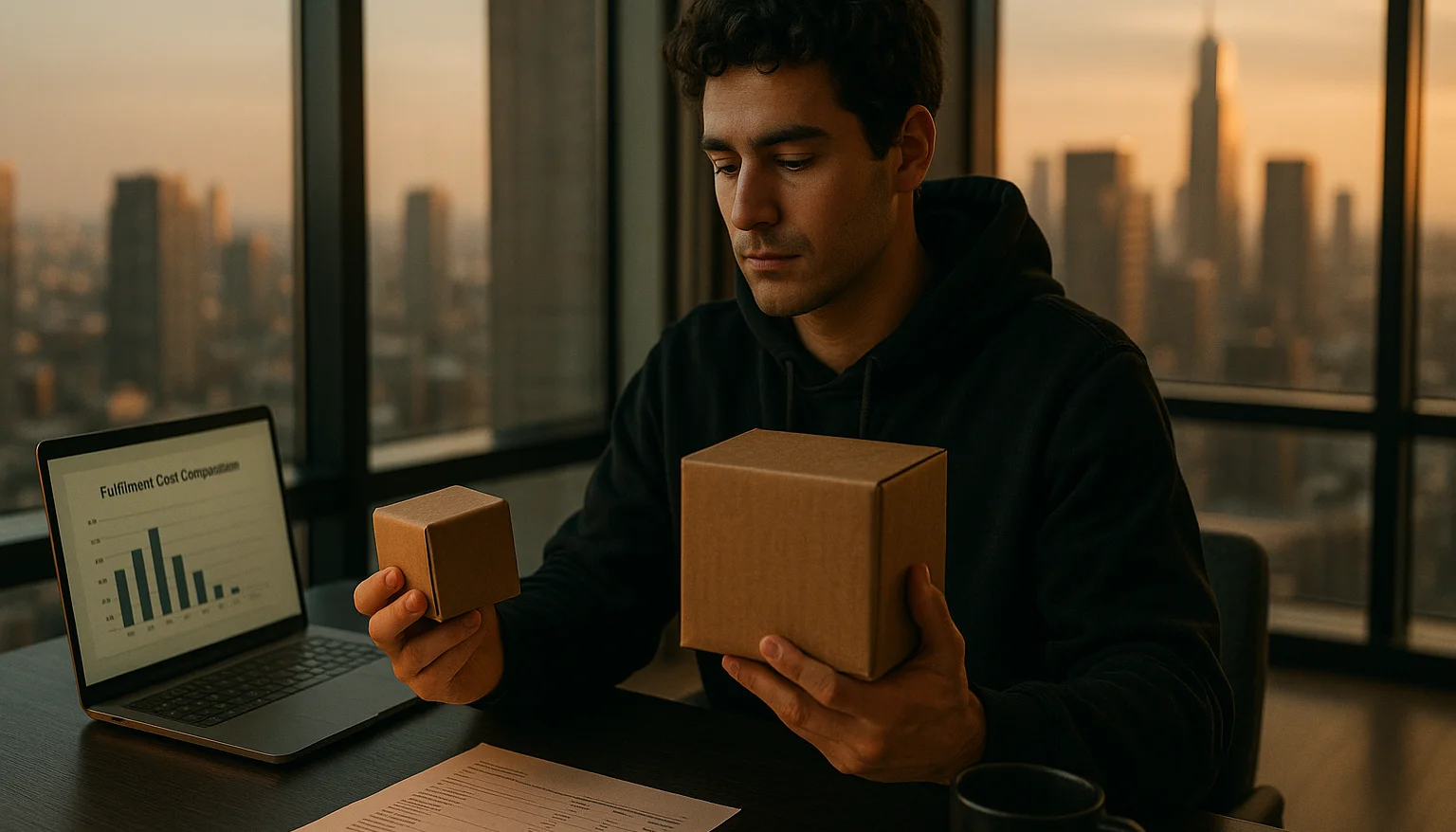
Every few months somebody types the same thing into Google: is dropshipping dead. In 2026 they type it more than ever, because the headlines got loud and the YouTube thumbnails got dramatic. So let me give you the honest answer up front, before any of the explaining.
No. Dropshipping is not dead in 2026. But the lazy, copy-paste, $2-product-from-AliExpress version of it is dead, and honestly, good riddance. That version was never a business. It was a slot machine with a Shopify theme on top.
I have watched this model since before it had a name. I have seen people make real money with it and I have seen far more people burn a few hundred dollars and quit. So instead of selling you hype or doom, I want to walk you through what actually changed, what still works, and whether you personally should bother.
Why everyone keeps asking if dropshipping is dead
Here is the thing nobody says out loud. People ask is dropshipping dead because they want permission to not try. It is a comfortable question. If the answer is yes, then the reason your store failed is the market, not you. If the answer is yes, you never have to feel the fear of actually starting.
The other reason is the gurus themselves. For years a whole industry sold the dream: build a store in a weekend, run some ads, wake up to sales. Passive income while you sleep. That was always a lie, and when reality caught up, the same crowd flipped the script and started screaming that dropshipping is dead so they could sell you the next thing instead.
Ignore both. The question is not whether a whole business model died. The question is whether the easy version died. It did. What is left is harder, cleaner, and actually worth your time.
What dropshipping actually is, in one plain paragraph
Dropshipping is simple. You list a product you do not physically own. A customer buys it from your store. You then buy that same product from a supplier, who ships it straight to the customer. You never touch a box. Your money is made on the gap between what the customer paid you and what you paid the supplier, minus ads and fees. That is the whole thing. No warehouse, no inventory sitting in your garage, low money to start. That low barrier is exactly why so many people pile in, and exactly why most of them lose.
The 2026 tariff that killed the cheap model
Now the part that actually changed the game, and the part most of those dramatic videos get half-right.
Since early 2026, low-value postal packages coming from China into the US no longer slide through for free. They face an import duty of roughly 54 percent, or around $100 per package, depending on how it is processed. The old loophole, the one where a tiny parcel under $800 came in with no duty at all, is gone. That loophole was the entire foundation of the cheap dropshipping model.
Think about what that means in real numbers. The classic move was buy a gadget for $3 on AliExpress, sell it for $25, eat the slow shipping, pocket the difference. Now add a duty that can be larger than the product itself. A $3 item is not a $3 item anymore. It might cost you $8, $10, more. Your margin does not shrink, it inverts. You start losing money on every sale and you do not even notice until the month closes.
So if your plan was to find a random $2 thing, slap a 5x markup on it, and let cheap Chinese shipping carry the rest, that plan is dead. Genuinely dead. Stop trying to revive it.
You buy a phone case for $2 and sell it for $10. That is a 500% margin. Sounds great, right? But in reality, the actual money you make isn't that much.
That was true even before the tariff. The tariff just made the math impossible to ignore. Cheap products were always a trap. Now the trap has teeth.
What died and what still works
Let me be precise here, because this is where people lose the plot. Two different things died, and one big thing did not.
What died: the generic store. The one with 200 random products, a stolen TikTok video as the only ad, a $4 item priced at $30, and zero brand. That store survived only because shipping was free and competition was lazy. Both of those props are gone. The lazy sellers are leaving the market in 2026, and I am glad. They made the whole thing look like a scam.
What also died: thin margins. You can no longer build on $2-3 of profit per sale. You never really could, but now it is obvious. If your product is cheap, your duty eats you, and you cannot afford the ads it takes to get seen. The days of listing a product and getting free traffic are long over.
What did not die: selling a real product that people actually want, presented better than your competitors present it. That is the whole game now, and it was always the real game. Branded products win. Differentiation wins. A higher price point with room for duty, ads, and profit wins. Dropshipping in 2026 is not dead, it just turned into something that looks a lot more like a normal business and a lot less like a cheat code.
Artur and the car towel
Let me make this concrete, because I hate abstract advice.
One of my students, Artur, started on TikTok Shop selling dog accessories. Minimal sales, no structure, the usual story. He was about to quit. Then he changed one thing about how he thought.
He picked a microfiber car drying towel. On its own, that is a commodity. You can find that exact towel for a few dollars from a hundred suppliers. The old dropshipper would have listed it raw, priced it at $19.99, and wondered why nobody bought. Artur did the opposite. He treated it as a branded product. Better presentation, premium packaging, a distinct identity, a clear reason this towel and not the other towel. Then he ran proper TikTok ads behind it.
December 2025: around $10,000 in revenue, more than 1,900 units in a single month, 4.7 out of 5 across 150-plus verified reviews. Same towel that sits in a thousand bargain bins. The difference was not the product. The difference was that he stopped selling a cheap thing and started selling a real one.
That is the entire lesson of dropshipping in 2026. Branding beats price. A customer is not buying a towel, they are buying the towel that looked like it was worth owning.
How to do dropshipping right in 2026
So if you still want in, here is the honest version of how to do it.
Pick a product with enough room in the price. Forget the $10 impulse junk. You want something where the retail price can absorb the product cost, the import duty, the ad spend, and still leave you real profit per sale, not 500% on pennies but actual dollars in your pocket. An electric oven bought for $600 and sold for $1,000 is only a 40 percent margin and earns you $400. A phone case at 500 percent earns you almost nothing. Chase profit per sale, not the margin percentage.
Pick a product people already want. You do not need a unique invention. Competition just means customers exist. Read how to find products to sell online before you commit a single dollar, because the product choice is 80 percent of the outcome.
Brand it. This is the part the lazy crowd skipped and the part that now decides everything. Your own name, your own packaging where possible, your own photos, your own angle. Be the towel that looks worth $30, not the towel that looks like it fell off a truck.
Sort out supply properly. With the tariff, where and how you source matters more than it used to. US-based suppliers, vetted Chinese partners, even local options change your whole unit economics. I broke this down in how to find suppliers for your store, and it is worth reading twice.
And give it real time. A realistic first sale comes after two to four weeks of actual effort, not two to four days. If you expected faster, you were sold a fantasy.
How do you move fast? Move slowly, but do it every single day.
Who should do dropshipping, and who should not
Straight answer. Dropshipping in 2026 suits you if you are willing to treat it like a business: pick carefully, brand seriously, learn ads, and survive a few weeks with no sales without rage-quitting. The barrier to entry is still low on money. The barrier on patience and thinking is higher than it has ever been.
If that sounds like too much, or you do not have ad budget yet, do not force it. Look at print on demand instead. With print on demand you are not importing finished goods, so the tariff problem mostly disappears, and you are selling your own design from the first day, which means you are branded by default. I would genuinely point a nervous beginner there first. Read print on demand for beginners and compare it honestly against dropshipping for your own situation.
Either way, the mindset is the same. There is no model on earth that pays you for doing nothing. Anyone telling you otherwise in 2026 is selling the corpse of the lazy dropshipping dream and hoping you do not notice it stopped breathing.
So, is dropshipping dead in 2026? No. The shortcut is dead. The business is alive, leaner, and waiting for people who are willing to actually build something. If you want the full step-by-step version of product picking, sourcing, branding, and ads, that is exactly what we walk through in the full course. Pick your product. Brand it like it matters. Start this week.